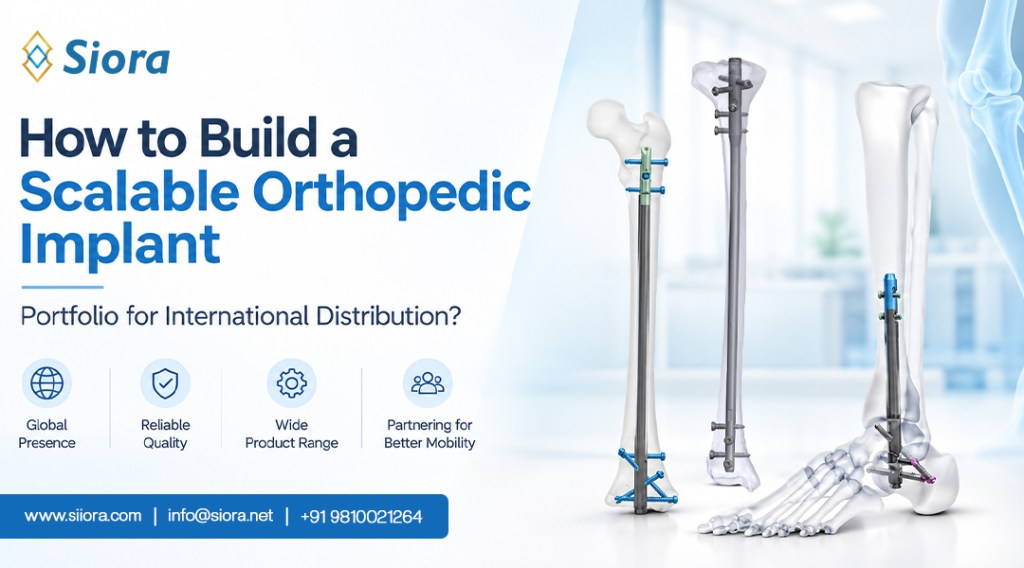
If you’re an orthopedic distributor supplying ortho surgical implants internationally, building a scalable product portfolio means more than having a large catalogue. A scalable implant portfolio is meant to balance varying market demands, implant diversification, changing inventory requirements, and regulatory requirements of different countries. As an orthopedic supply company, your goal should be to build a portfolio that fits your specific market demands and helps you grow your distribution business in a sustainable way.
This comprehensive guide provides critical insight into how you can build an implant portfolio that not only has volume but also everything else it needs to be scaled.
Start With Market Demand and Core Product Categories
Before you invest money in importing a large number of implants from random categories, it’s important to understand your specific market. Every country or region has its specific demands based on its population, types of patients, and the status of health infrastructure. Analyze the trend and history of implants in your specific region by evaluating customer reports, hospital purchasing patterns, and product forecasts. Based on this, identify the core product categories that can work well in that area. Instead of selling only niche products, distributors should target core categories such as locking plates, intramedullary nails, cannulated screws, and external fixation systems. Once you see a clear pattern in a specific category, you can go niche.
Create a Balanced Portfolio Across Sizes and Configurations
Portfolio scalability is not only about adding new implants to your current inventory. A reliable distributor should make sure that for each category, it has balanced product availability across different sizes and configurations. Even if you are dealing in a specific product category, having implants and instruments in different sizes, angles, and configurations helps buyers get exactly what they want.
Differentiate between fast-moving products and slow-moving products
Fast-moving products in orthopedic implant distribution refer to implants that are cleared from inventory very easily and on a consistent basis. On the other hand, slow-moving products have a very low buyer frequency and remain in the inventory for a long time. As a distributor, you should identify these two and import implants from your orthopedic implant manufacturer in a strategic way, keeping your inventory balanced. A good strategy for fast-moving products is to set up a consistent supply chain with your manufacturing partner, ensuring that implants are supplied within a predetermined time-frame, helping you prevent stockouts.
Choose a manufacturer that supports your implant portfolio expansion
Choosing a reliable trauma instruments manufacturer helps you expand your implant portfolio systematically. Many distributors rely on multiple manufacturing partners for importing different sorts of implants and instruments, which leads to communication issues, supply inconsistencies, and poor management. By partnering with a reliable manufacturing partner that makes high-quality and safe implants, an orthopedic supply company can ensure a consistent supply of diverse products from a single source.
This helps distributors monitor and manage their inventory more efficiently, allowing them to compete in bigger markets with a solid backup.
Conclusion
For an orthopedic supply company, building a scalable implant portfolio means more than adding new products to its catalogue. By evaluating critical factors such as market demand, current health infrastructure, fast- and slow-moving products, and ensuring availability of core categories, distributors can fulfil the diverse requirements of their customers without struggling with overstocking and stockouts. A good manufacturing partner also supports distributors in scaling their business by providing high-quality and safe implants on a consistent basis.
Meet experienced orthopedic implant manufacturers and explore distributorship opportunities at the upcoming WHX Dubai 2027.

